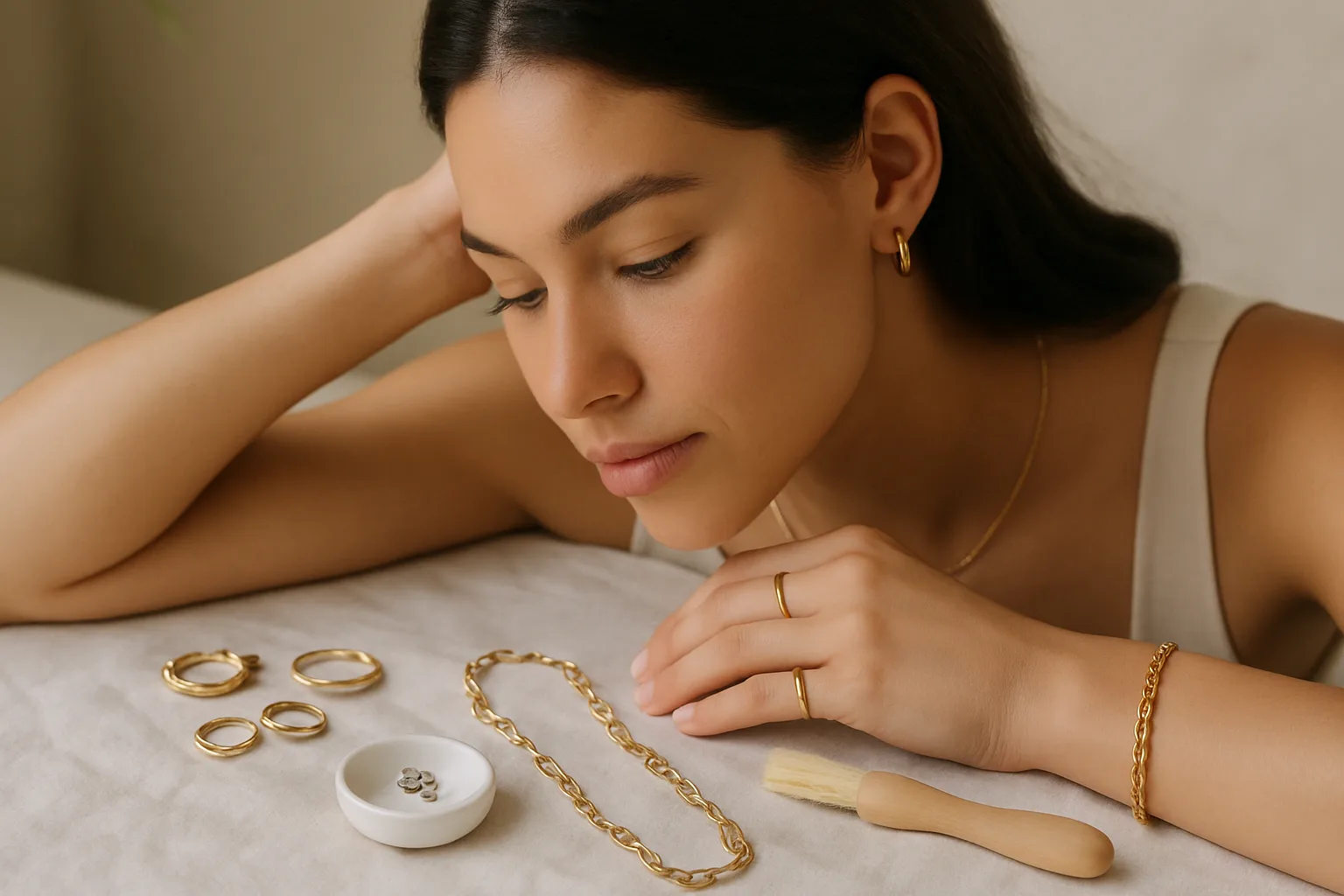
A small jewelry wardrobe can offer plenty of variety when each piece has a clear role. Choose items that work with several outfits: everyday earrings, a simple chain, and one ring or bracelet you find comfortable. Include pieces you genuinely enjoy rather than filling gaps based on a checklist. Repeated wear is a better measure of usefulness than the number of items you own.
Change the way you combine pieces to create fresh looks. Wear a pendant alone one day and layer it with a plain chain another time. Pair small hoops with a bolder necklace, then switch to understated jewelry when your clothes have more detail. Moving one item from its usual combination can make familiar pieces feel new.
Keep your collection visible and organized so you remember what you own. Store chains separately, keep pairs together, and put frequently worn jewelry in an easy-to-reach place. Review your pieces occasionally: repair what you still love, pass along items you no longer wear when appropriate, and shop only when you know what would serve your wardrobe. A considered edit makes everyday choices simpler.
Small Adjustments That Multiply Your Options
Once your core pieces are in place, the way you wear them matters as much as what they are. Placement, scale and finish can each change the feel of a familiar item without adding anything new to your jewelry box.
Play with placement
A necklace sits differently over a crew neck than against bare skin at a V-neck, so the same chain can look delicate one day and graphic the next. Bracelets can move from wrist to wrist or be stacked with a watch. If you have a second piercing, try moving a stud from the lobe to the upper ear and pairing it with a hoop below. Rings can move between fingers too. A band worn on the index finger reads as more of a statement than the same band on the ring finger. If you are unsure which lengths suit which necklines, our guide to necklace lengths sets out the basics.
Mix metals with intention
Many small collections end up split between gold-tone and silver-tone pieces that never get worn together. Combining them can open up new pairings. It tends to look deliberate when one tone clearly leads and the other appears in a second spot, or when a two-tone piece ties the look together. This simple step can almost double the number of workable combinations.
Think in outfits, not items
Jewelry that is versatile in theory can still sit unused if it clashes with what you actually wear. Spend a few minutes holding your pieces against your most-worn tops and necklines. Note which combinations you like and which pieces never seem to fit. This shows where a single, well-chosen addition would help, such as a slightly longer chain for high necklines or a pair of earrings in a different shape. It also stops you buying near-duplicates.
Look after the pieces doing the most work
Favourites get the most wear, so they need the most care. Take rings off before washing your hands with harsh soaps or applying lotion. Wipe plated items gently after wearing them, and keep chains apart so they don't knot. If you like to layer, our tips on how to layer necklaces without tangles make it easier to wear several chains at once. A small collection kept in good condition will stay versatile much longer than a large one worn carelessly.