Start a necklace stack with one piece you already wear often. Add a second chain at a clearly different length so each necklace has room to show. If the lengths are close, the pendants may land together and the chains can twist around one another. A shorter plain chain paired with a longer pendant necklace is a simple, flexible combination.
Varying chain styles can add definition, but too many competing details may make a stack feel busy. Try one delicate link beside a slightly bolder chain, or mix a pendant with a plain strand. Keep the overall scale in mind: a large pendant can be the focal point, while smaller pieces support it. There is no need to use every necklace at once.
To reduce tangling, put on the shortest necklace first and fasten each clasp before adding the next. Some people find that a layering clasp helps keep chains separate, though it is not essential. When taking the stack off, unclasp the pieces instead of pulling them over your head. Store necklaces flat or individually so they are ready to wear again.
Choosing Chains That Stay Put
Once you have the basic lengths sorted, the chains themselves make a big difference to how well a stack behaves through the day. Fine, very light chains are the most likely to flip and knot because they move with every turn of your head. Pairing a light chain with something that has a little more weight, such as a curb, box or rope chain, gives the stack an anchor. The heavier piece tends to sit still, and the lighter one has less chance to wrap around it.
Pendants also shape how a stack moves. A small charm on a short chain can slide around to the back of the neck, while a heavier pendant pulls its chain into a steady V. If one necklace keeps wandering, try swapping its position with another or adding a slightly heavier pendant to the longest strand so it hangs straight.
Small adjustments that help
- Use extender chains. A short extender lets you fine-tune a length by a few centimetres, which is often all it takes to stop two pendants from colliding.
- Mind the neckline. Crew necks and high collars can push chains together, while open or V-shaped necklines give each layer more space to settle.
- Check the clasps. Turning each clasp to sit at the back before you head out keeps chains from twisting as the day goes on.
- Limit the count. Two or three necklaces are usually easier to manage than four or five, especially with fine chains.
Keeping a stack looking good
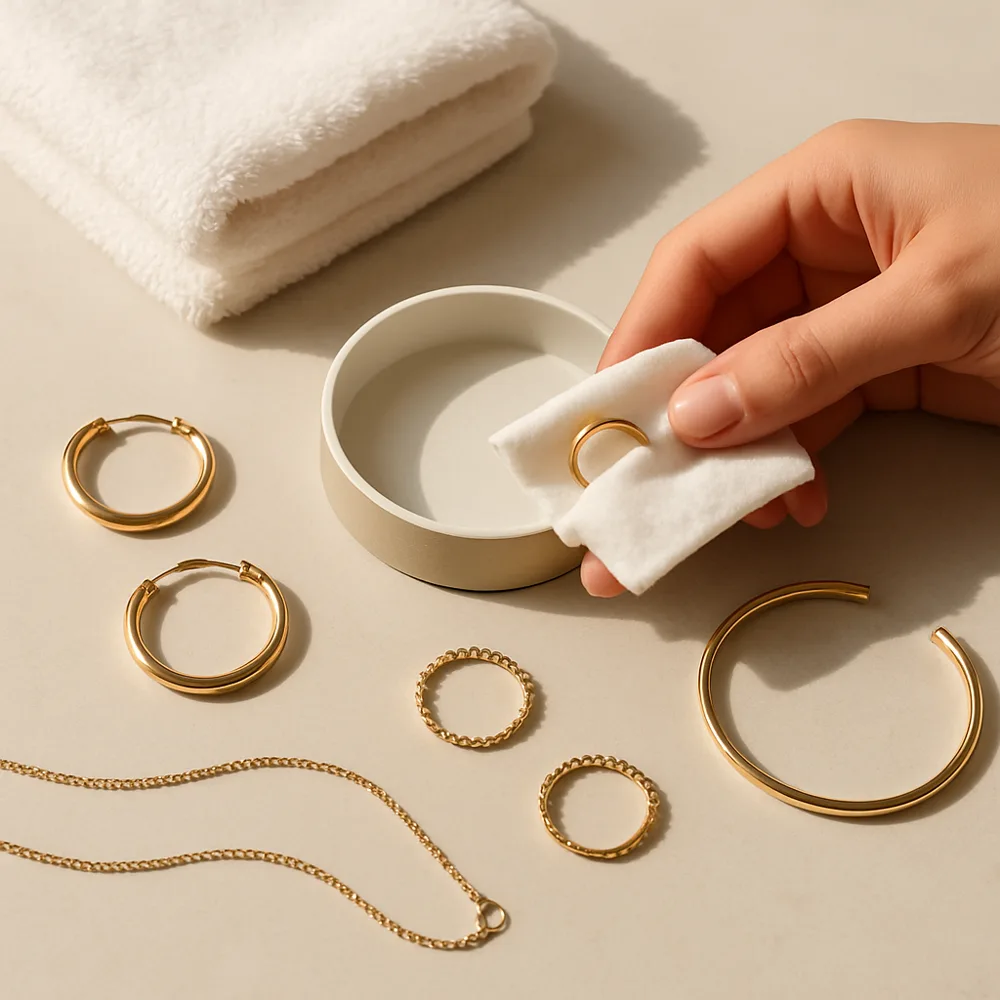
Mixed metals can work well together, but plated pieces wear at different rates, so a stack worn daily may start to look uneven over time. Wiping chains with a soft cloth after wearing and keeping them away from perfume, lotion and water helps the finish last longer. If a chain does knot, lay it on a flat surface and ease the tangle loose with a pin rather than pulling the ends.
If you are still deciding which lengths suit you, our simple guide to necklace lengths is a useful companion, and our tips on building an affordable everyday collection can help you pick pieces that layer well without overspending.