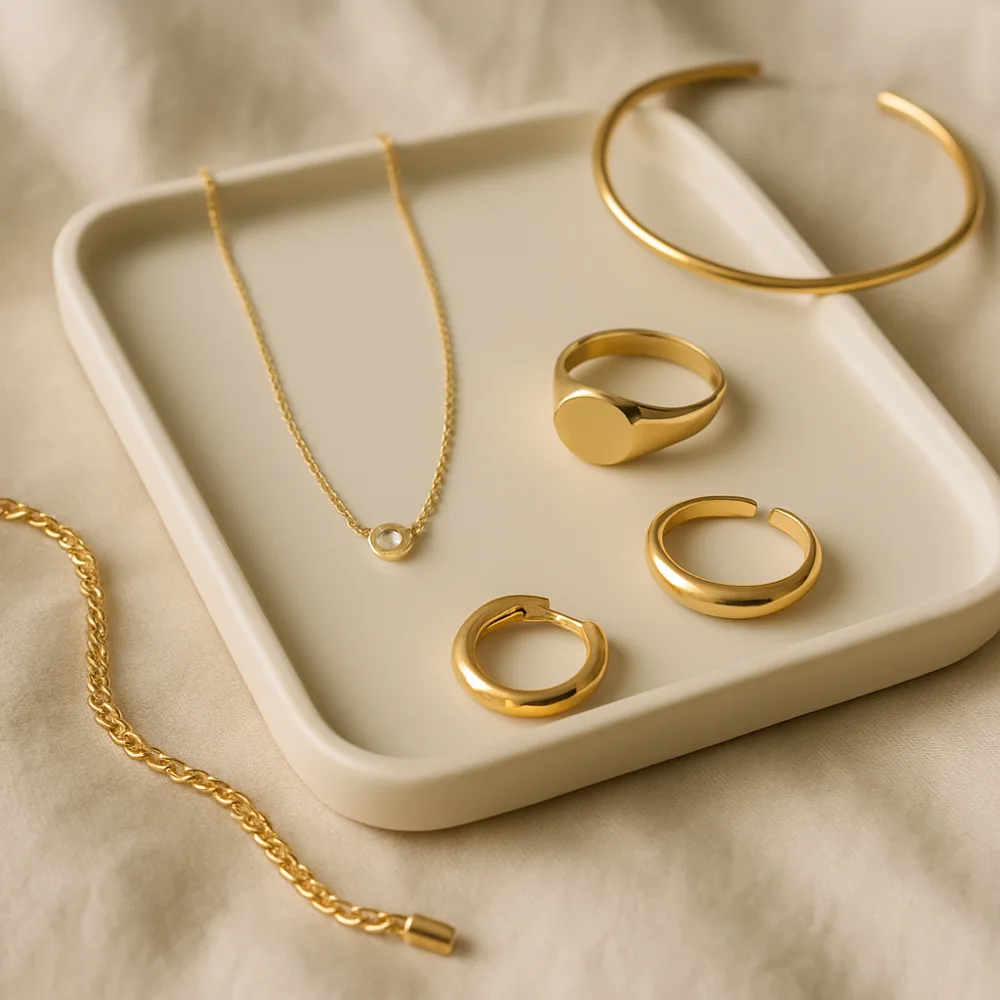
A ring should feel secure without pinching or making your finger uncomfortable. Fingers can vary in size with temperature and other everyday conditions, so a measurement taken at one moment is only a guide. Measure the finger where you plan to wear the ring, and use the sizing method provided by the maker if one is available.
Compare the ring's stated size with a ring that already fits well on the same finger. Remember that wider bands can feel snugger than narrow ones, even when the marked size is the same. If you are between sizes, check the seller's fit guidance and return policy before ordering rather than guessing based on a different finger.
When trying on a ring, it should pass over the knuckle with gentle resistance and sit comfortably once in place. It should not leave deep marks or spin constantly. Adjustable rings can offer flexibility, but frequent bending may stress some designs, so follow the maker's instructions. A comfortable fit is more important than choosing a size because it is usually yours.
Practical Tips for Measuring and Testing Fit at Home
If you do not have a professional sizer to hand, a few careful habits make a home measurement far more reliable. The most common mistake is measuring once, in a hurry, and treating that number as final. A better approach is to measure the same finger several times across a day or two, ideally in the late afternoon or evening, when fingers are often slightly fuller than first thing in the morning. Avoid measuring straight after exercise, a hot shower or time out in the cold, because these can temporarily change the size of your fingers in either direction.
Using a strip of paper or string
A thin strip of paper usually works better than string, because string can stretch or dig in. Wrap it snugly around the base of the finger, mark where the end overlaps, then lay it flat and measure the length against a ruler. Check that the strip will still slide over your knuckle, since a measurement taken only at the base can produce a ring you cannot actually get on. Compare your result with the seller's size chart, and note whether the chart uses US, UK or another system, as the labels are not interchangeable.
Things that change how a ring feels
- Knuckle shape: if your knuckles are noticeably larger than the base of your finger, a ring that clears the knuckle may feel loose once in place. Some people choose a ring with a slightly squared inner edge or small sizing beads to stop it turning.
- Inner profile: a domed or comfort-fit interior tends to slide on more easily and feel softer than a flat interior of the same size.
- Stacking: wearing two or three bands together on one finger often calls for going up a little, because the combined width behaves like one wide band.
- Dominant hand: fingers on your dominant hand can be slightly larger, so measure the hand you will actually wear the ring on.
Living with a new ring
Give a new ring a few days of normal wear before deciding it is wrong, while staying within the seller's return window. Pay attention to how it feels when you wake up, after typing or carrying bags, and in warm weather. A ring that is slightly snug in the heat but never painful is usually a good fit. If you are building a small rotation of pieces, our guide to an affordable everyday jewelry collection covers how rings fit alongside other daily essentials.