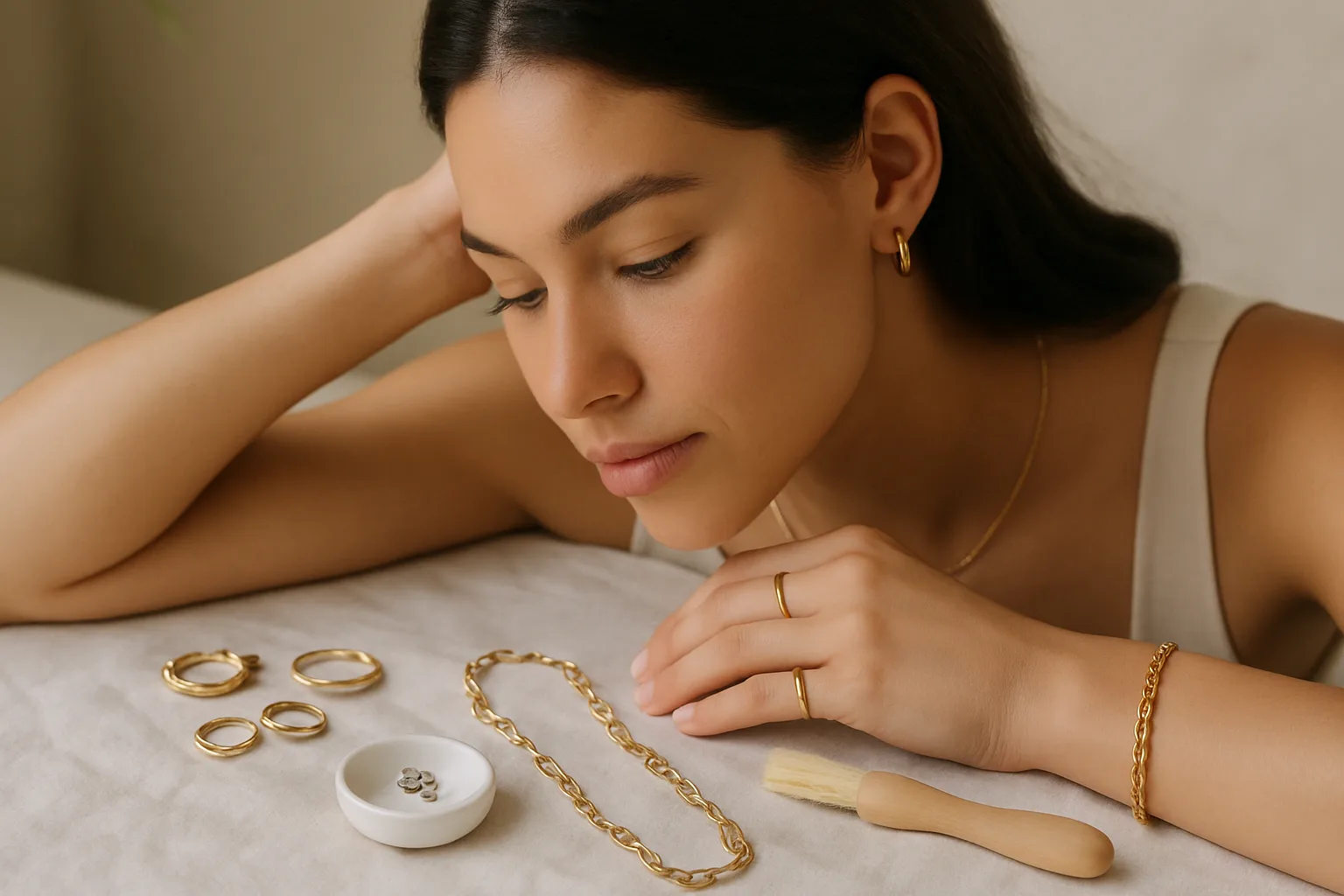
Plated jewelry has a surface layer over another material, and that layer can gradually change with wear. Friction, moisture, cosmetics, and contact with other items may all affect how long the finish looks its best. The exact care needs depend on the piece, so read its product information rather than assuming every plated item is made the same way.
Put plated jewelry on after lotions, fragrance, and hair products have dried. Remove it before swimming, showering, exercising, or doing chores that involve chemicals or repeated rubbing. After wearing, gently wipe the piece with a soft cloth and store it separately. Avoid polishing cloths or abrasive cleaners unless the maker specifically says they are appropriate.
Some change in appearance may happen over time, particularly on frequently worn items. Care can slow wear but cannot make a surface finish permanent. If you notice a change, stop using strong cleaning methods and check the care guidance. Choose pieces suited to your routine: a favorite for occasional wear may need different expectations from jewelry you plan to wear every day.
Understanding Plating Types and Making Pieces Last Longer
Not all plating behaves the same way, and knowing a little about what you own helps you set realistic expectations. Common terms you will see on product listings include gold plated, gold vermeil, rhodium plated and PVD coated. Gold plating is typically a thin layer applied over a base metal such as brass or copper. Vermeil generally refers to gold over sterling silver, usually with a thicker layer than standard plating. Rhodium is often used on silver and white gold to add brightness and resist tarnish. PVD (physical vapour deposition) coatings are frequently applied to stainless steel and tend to be more resistant to everyday rubbing. Rules for these terms vary by country and seller, so treat them as a starting point and read each listing carefully.
Where wear shows first
Plating usually fades first on the areas that get the most contact: the inside of rings, the backs of pendants that rest against skin, clasps you handle often, and the edges of bangles that knock against desks. If you love a ring, consider alternating it with other pieces so no single item takes all the friction. Earrings and necklaces generally keep their finish longer than rings and bracelets simply because they touch fewer surfaces.
Storage habits that help
- Keep each piece in its own soft pouch or a lined compartment so harder items cannot scratch it.
- Store jewelry somewhere cool and dry rather than in a steamy bathroom.
- A small anti-tarnish strip or silica gel packet in a closed box can help limit moisture.
- Fasten chains before storing to reduce tangles and rubbing; our guide on layering necklaces without tangles has more ideas.
Cleaning gently
When a wipe is not enough, a few drops of mild, unscented soap in lukewarm water and a very soft brush or cloth are usually sufficient. Rinse briefly, then pat completely dry before storing. Avoid ultrasonic cleaners, toothpaste, baking soda and dips sold for solid silver, as these can strip a thin surface layer quickly.
When a piece starts to fade
Some jewellers offer replating, which can refresh a well-loved item, though cost and suitability depend on the piece and base metal, so ask a local professional for advice. If you have sensitive skin, a worn-through finish can expose the base metal underneath, so pay attention to any irritation. For more on choosing pieces that fit a realistic budget and routine, see how to build an affordable everyday jewelry collection.