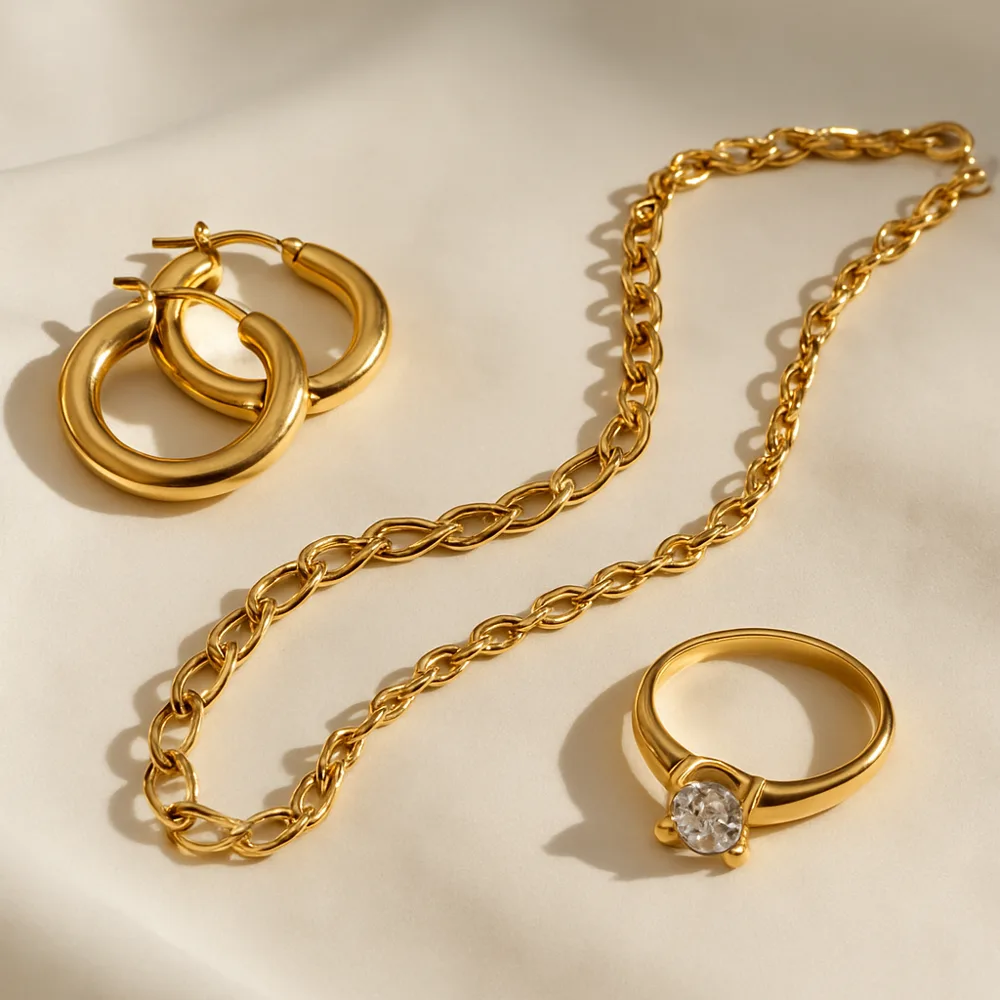
Product photos are helpful, but scale can be difficult to judge on a screen. Look for measurements in the description and compare them with an object or piece you already own. For earrings, check drop length and width; for chains, note total length; for rings, verify the sizing system. Photos on a model can offer context, but they may not show exact proportions.
Read material and construction details carefully. Find out what the visible finish covers, which metal touches the skin, and whether stones or decorations are set, threaded, or glued. If details that matter to you are absent, ask the seller before placing an order. Be cautious of vague claims that promise exceptional quality without explaining what the piece is made from.
Before checkout, review shipping, returns, and exchange conditions, especially for items with sizing or hygiene restrictions. Keep order details and care instructions. When the jewelry arrives, inspect the clasp, edges, and finish in good light before wearing it. A few minutes of checking helps you decide whether the piece matches the description and fits your needs.
Reading Between the Lines of a Product Listing
Once you have checked measurements, materials and policies, it helps to look more closely at how a listing is written and presented. Small details often reveal how much care a seller puts into describing what they sell, and that can tell you a lot about what will actually arrive in the post.
Learn the language of metals and finishes
Terms such as plated, vermeil, gold-filled and solid describe very different constructions. Plating is a thin surface layer that can wear over time, especially on rings and bracelets that rub against surfaces. Gold-filled pieces carry a much thicker bonded layer, while solid metal has no coating to wear through. Stainless steel and titanium are often chosen by people with sensitive skin, but it is still worth checking what the clasp and earring posts are made from, because these parts are sometimes a different metal from the main piece. If you know you react to nickel, look for a clear statement about it rather than assuming.
Compare photos with care
Look for several angles, including the back of a pendant and the side of a ring band. A listing that only shows one heavily styled image may be hiding thin metal or uneven stone settings. Close-ups of the clasp are particularly useful, since a weak fastening is one of the most common reasons an otherwise pretty chain gets lost. Be aware that lighting and editing can make metal look warmer or brighter than it is in daylight.
Think about how you will wear it
Before buying, picture the piece alongside what you already own. A delicate chain may disappear under a high neckline, and a long pendant may clash with other layers. Our guide to necklace lengths can help you choose a size that sits where you want it, and if you like stacking pieces, the tips on layering necklaces without tangles are worth reading before you order several chains at once.
Keep your budget focused
It is easy to add extra items to reach a free-shipping threshold or a bundle discount. Pause and ask whether each piece fills a real gap in your collection. Buying fewer, well-described items you will wear often usually works out better than a basket of impulse picks, and it fits naturally with building an affordable everyday collection over time.