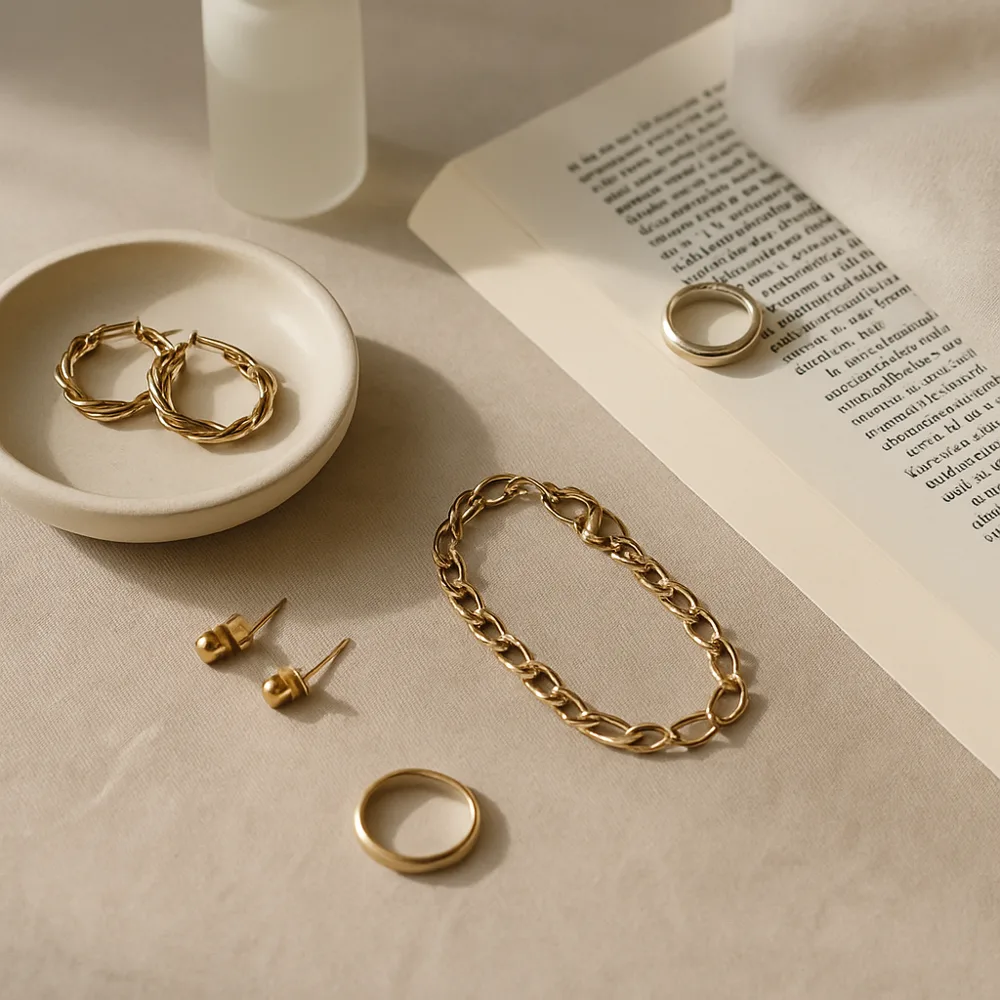
Rings meet hands, surfaces, soaps, and everyday objects constantly, so they may need more attention than less frequently worn jewelry. Remove rings before cleaning, gardening, exercise, or other activities that involve chemicals or impact. This can help limit scratches and reduce the chance of a ring catching or getting lost.
After wearing, wipe a ring with a soft cloth if its material allows. Avoid using a brush or cleaner around stones and settings unless the maker says it is safe. Check that any visible decoration feels secure, and pay attention to rough edges or a band that has changed shape. If you suspect damage, stop wearing it until it can be assessed.
Store rings separately to reduce contact and scratching, especially when different materials are kept together. Keep them away from sinks and open counters where they can be knocked or misplaced. If a ring feels tight, loose, or uncomfortable, do not ignore the fit. Wear habits, sizing, and care instructions all contribute to enjoying a ring over time.
Caring for Different Ring Materials and Finishes
Not every ring responds to care in the same way, and knowing what yours is made of makes everyday maintenance much easier. Affordable rings are often plated, coated, or made from base metals, so gentle habits matter even more than they do with solid precious metals.
Plated and coated rings
Gold-plated, rose-gold-plated and silver-plated rings have a thin surface layer over another metal. Friction, hand sanitiser, lotion and perfume can wear that layer down, usually first on the inside of the band and on the edges that rub against neighbouring fingers. Put on creams and fragrance first and let them dry before slipping rings on. Skip polishing cloths that contain abrasive compounds, since they can remove plating along with tarnish.
Sterling silver
Silver darkens naturally when exposed to air and moisture. Regular wear actually helps slow this, but rings left in a humid bathroom tarnish faster. A dedicated silver cloth works well on plain bands, and storing silver in a small sealed bag or a lined box with an anti-tarnish strip can keep it bright for longer.
Stainless steel, titanium and tungsten
These metals are durable and resist tarnish, which makes them a good choice for rings worn every day. Warm water with a drop of mild soap is usually all they need. Tungsten is very scratch-resistant but can crack if dropped on a hard floor, so it still deserves some care.
Stones, enamel and resin
Softer materials such as pearls, opals, turquoise, enamel and resin can be damaged by soaking, heat or harsh chemicals. Wipe them with a slightly damp cloth and dry them straight away. Glued-in stones, common in budget pieces, can loosen if left wet, so avoid submerging them.
Small habits that add up
- Take rings off before washing your hair or applying hand cream.
- Rotate between several rings rather than wearing one constantly.
- Give rings a quick look each week for loose stones or worn plating.
If you are building a small rotation of pieces, our guide to building an affordable everyday jewelry collection offers ideas for choosing materials that suit your routine and budget.