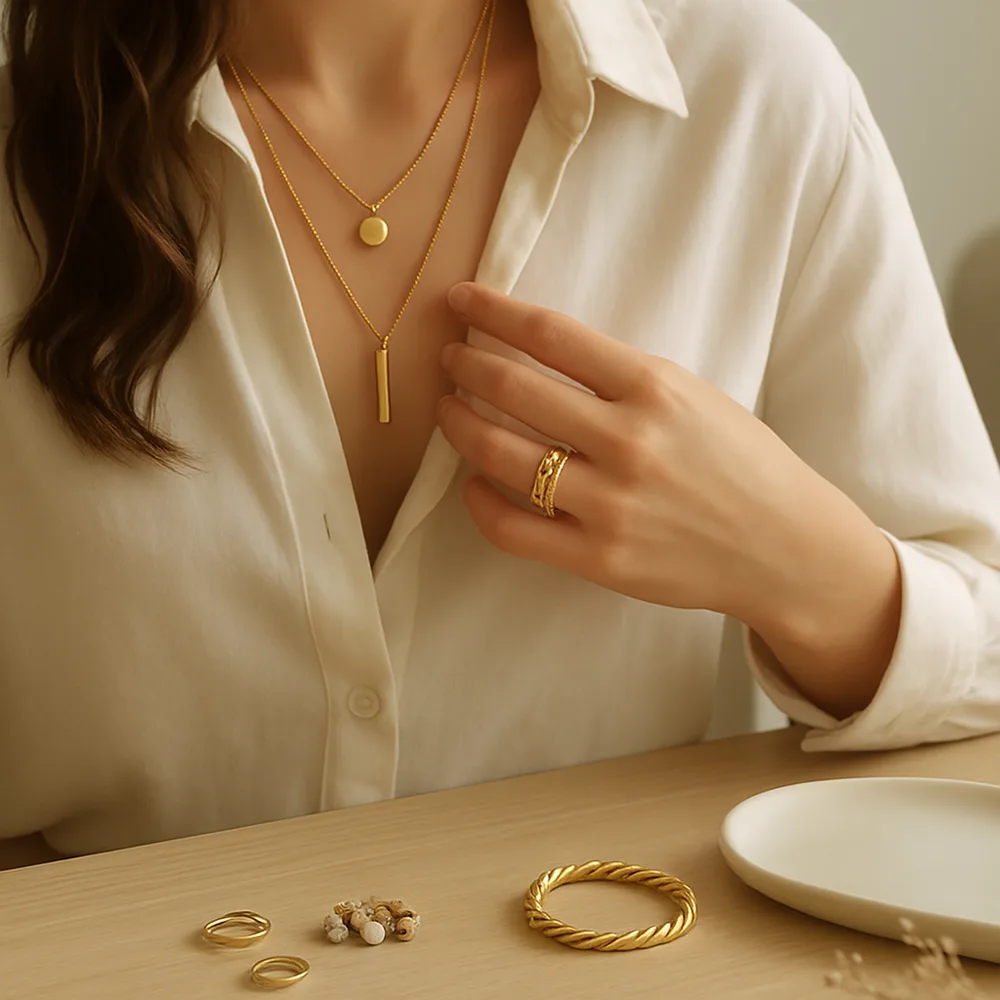
Instead of shopping for jewelry in isolation, start with clothes you wear regularly. Notice the necklines, colors, and textures that appear most in your wardrobe. A short necklace may suit open collars, while a longer pendant can work with simple tops. Earrings with a clear shape can add interest to outfits that otherwise have little detail near the face.
Consider whether you prefer quiet accessories or pieces that become the focal point. If your clothing is often patterned, a simpler jewelry style may feel easy to combine. With plain basics, a more sculptural earring or textured chain can add definition. These are starting points, not rules: what matters is whether the full outfit feels comfortable and personal to you.
Before buying, imagine at least three outfits the piece could work with. Check that its color and scale fit your usual choices, and review the materials and care needs. A jewelry box full of versatile pieces is not required; even a few items that suit your actual wardrobe can create many combinations. Choose for the life and clothes you have, not an imagined occasion.
Matching Metals, Scale and Everyday Practicality
Once you know which necklines and colours dominate your wardrobe, the next useful step is to look at the metal tones and hardware already in it. Buttons, belt buckles, zips, watch cases and even the frames of your glasses all carry a finish, usually silver, gold or something in between. Jewelry that echoes those details tends to look intentional without much effort. If your accessories are mixed, that is fine too: mixing metals works best when it is repeated, for example a gold chain paired with a ring that combines both tones, so the combination reads as a choice rather than an accident.
Think about colour temperature
Warm wardrobes built around camel, rust, olive and cream often sit comfortably next to yellow gold, brass and amber-toned stones. Cooler palettes of navy, grey, black and icy pastels usually pair easily with silver, steel and clear or blue stones. Neutral pieces such as pearls, white enamel or simple rose gold can bridge both, which makes them a sensible early purchase if you are building slowly.
Match scale to fabric weight
Heavy knits, denim and structured jackets can visually swallow a very fine chain, while a chunky collar necklace may overwhelm a thin silk blouse. A quick test is to hold the piece against the garment in natural light and step back from a mirror. If you notice only the jewelry or only the clothes, adjust the scale. Our guide to necklace lengths can help you judge where a pendant will actually sit.
Consider your routine
Practical comfort matters as much as looks. Long dangling earrings can catch on scarves and hoods, bracelets may knock against a keyboard all day, and rings with raised settings can snag delicate knitwear. If you wear layered necklaces with collared shirts, look at clasp placement and chain thickness; the tips on how to layer necklaces without tangles are useful here.
Finally, keep a short note of the gaps you notice when getting dressed, such as a missing pair of small hoops for work or a longer chain for high necklines. Shopping from that list, rather than from impulse, is one of the simplest ways to build an affordable everyday collection that you genuinely wear.